
If you spend enough time around supplement forums or conversations, you will undoubtedly hear someone say that Protein Powder Fillers are “full of filler” and a “waste of money.” Oftentimes, this criticism is inaccurate, but there are some brands for which these criticisms are definitely warranted.
Not every added ingredient in Protein Powder Fillers is automatically bad. A protein powder can still contain additives like flavors, sweeteners, or gums. It can remain high quality and effective. The problem is when the formula drifts from being protein-forward, wasting money on a product that won’t deliver its benefits.
For this article, I wanted to look at products that feel overvalued for what they deliver, especially when a big percentage of that protein scoop is actually going towards extra carbs, fats, or unnecessary amounts of additives rather than actual protein.
Don’t worry – I have also included a few options for protein powder from companies that go above and beyond to deliver high-quality protein that drives real results.
In a Hurry? Here’s the Quick Version
Protein powders I think are overrated and robbing you with filler
- Muscle Milk Genuine Protein Powder
- BSN Syntha-6
- Ghost Whey
- Optimum Nutrition Gold Standard
- MuscleTech Grass-Fed Whey
Protein powders that are actually protein
- Transparent Labs Whey Isolate
- Dymatize ISO100
- Perfect Sports Diesel Whey Isolate
What I Mean by “Robbing You With Filler”
To be clear, I am not saying every product on this list is useless, including Protein Powder Fillers.
A few of them are popular for a reason. Some taste great. Some mix well. Some are convenient and easy to find. And some can absolutely help you hit your daily protein target.
But if your goal is buying a protein powder that is actually protein-dense, without spending your money on unnecessary additives, then some formulas are clearly better than others.
At FeastGood, one of the main ways we evaluate a protein powder is by looking at the protein percent of calories. That is, how much of the calorie load is actually coming from protein rather than carbs and fats. Our grading scale is the following:
- Excellent: >85% protein per scoop
- Great: 75-84%
- Reasonable: 65-75%
- Insufficient: less than 65%
That was not the only thing I looked at, though.
I also looked at what kind of sources of carbs and fats were used, whether the company leaned heavily on artificial add-ins, and whether the price point made sense for what you were actually getting.
1. Muscle Milk Genuine Protein Powder

Why I Would Skip It
- Too much of the calorie load is coming from carbs and fats instead of protein
- Starts acting more like a meal-style drink than a lean protein powder
- Hard to justify the value when cleaner options exist
My Thoughts
Muscle Milk Genuine Protein is one of the easiest examples of a protein powder that feels less protein-forward than people expect.
When FeastGood did an in-depth review of Muscle Milk Genuine Protein Powder, we found that only about 47% of its calories come from protein. That is an incredibly low amount of protein for a product that is clearly labeling itself as a Protein Powder.
A reminder on how we calculated protein percentage:
1 scoop: 270 calories and 32g of protein. Protein is 4 calories per gram
32g protein x 4 calories/g = 128 calories from protein
[128 protein calories / 270 total calories]*100 = 47.4%
To be fair, this low protein percentage does not make Muscle Milk automatically bad. If someone wants a more filling shake with a creamier texture and a little more staying power, I can understand the appeal. The problem is that this is very different from what most shoppers mean when they say they want a quality protein powder.
With 9g of fat and 20g of carbohydrates per serving, the product begins to function more like a snack or mini meal than a lean protein source. That can work in some situations, but it is not what I would personally spend money on if the goal is simply getting more efficient protein into the day.
Muscle Milk Genuine Protein uses a combination of whey protein concentrate and whey protein isolate – a common blend of medium and fast digesting proteins which helps to balance out the protein content and cost per serving. After protein, the product contains:
- 4 ingredients for flavor:
- Cocoa, Natural & Artificial Flavor, Sucralose, Acesulfame Potassium
- 6 ingredients for texture/mixability
- Maltodextrin, non-dairy creamer, mono- and diglycerides, soluble corn fiber, oat hull fiber, calcium phosphate
- 1 ingredient to prevent spoiling
- Tocopherols
Muscle Milk Genuine Protein Powder costs around $1.92 per serving. This cost per serving is on par with some of the highest quality pure whey isolates available on the market that are greater than 90% protein per serving.
Overall, my issue with Muscle Milk is not the product, but rather it’s how the product is presented. For a protein-dense, third party tested meal replacement, $1.92 is a great value.
Selling a product as a protein powder when less than half of the calories within the product even come from protein; that’s the robbery.
2. BSN Syntha-6
Why I Think It’s Overrated
- Protein density is very low for a product sold as a protein powder
- The ingredient list is doing a lot to create a dessert-like experience
- You are paying as much for taste and texture as for protein itself
My Thoughts
I understand why BSN Syntha-6 has been popular for so long.
It tastes good, feels rich, and usually comes across more like a treat than a typical protein shake. For some people, that is exactly why they love it. A protein powder that is enjoyable to drink is easier to use consistently, and I do not want to ignore that.
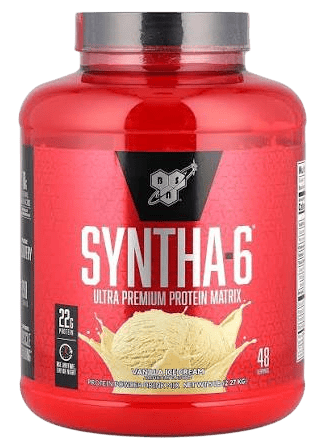
The issue is that the macros reflect that experience. Depending on the flavor, Syntha-6 lands around 44% to 46% of calories from protein, based on 22 grams of protein with roughly 190 to 200 calories. That puts it in the same category as Muscle Milk Genuine Whey, well below what I would want from a protein powder that is being purchased primarily to increase protein intake.
The ingredient list also explains why the product feels so rich. There is a laundry list of 17 items that all contribute to a formula that is doing more than simply delivering protein. None of those ingredients automatically makes the product unusable, but they do make it harder to call Syntha-6 a lean or minimal protein powder.
Ingredients listed in Chocolate Cake Batter:
- 5 ingredients for flavor:
- Cocoa, Natural & Artificial Flavor, Sucralose, Acesulfame Potassium, Salt
- 11 ingredients for texture/mixability
- Polydextrose, creamer (made from sunflower oil and corn syrup solids), mono- and diglycerides, dipotassium phosphate, tricalcium phosphate, soy lecithin and/or sunflower lecithin, MCT powder, cellulose gum
- 1 ingredient to prevent spoiling
- Tocopherols
That does not mean it has no place. If someone wants a more indulgent shake and they are fine spending calories that way, there is nothing wrong with that. It’s just important for consumers to be aware of what they are purchasing.
What’s more, the value of BSN Syntha-6 as a protein source also falls flat. Syntha-6 costs between $1.42 and $1.83 per serving, with each serving only providing 22g of protein. We can compare that to a product like Dymatize Iso100 which provides slightly higher total protein (25g) but has twice the protein percentage (91%) and costs an almost identical $1.40 to $1.90 per serving.
I would definitely not BSN Syntha-6 as a strong choice for someone who is worried about filler ingredients or wants a high quality protein powder.
This is the kind of product where the taste experience is doing a lot of the heavy lifting. And again, that is fine. I just think it is important to call it what it is. If your goal is mostly protein, Syntha-6 falls well short.
3. Ghost Whey
Why I Think It Misses the Mark
- The product is built around unique flavors and collaborations, which also means a busier formula
- There are a lot of artificial flavors and food dyes
- The higher price point is not justified by the quality
My Thoughts
Ghost Whey is not the worst product in this article, and when I tested it for Feastgood.com there were a lot of aspects of the product I really liked. It tastes great, mixes well, and contains digestive enzymes which can make it easier to tolerate for people with lactose sensitivities.
On macros alone, Ghost looks better than products like Muscle Milk or Syntha-6, which is why I think the criticism needs to be more specific than simply calling it a “bad” protein powder.
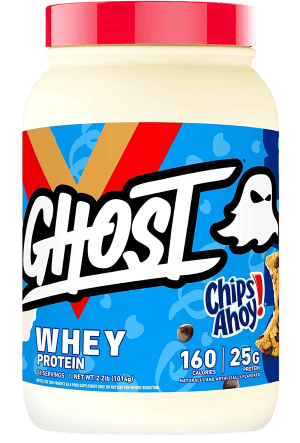
Many flavors give you 25 grams of protein with roughly 120 to 150 calories, so the protein percentage can range from the high 60s into the low 80s depending on the flavor. That means some versions can look reasonable or even good by protein percentage, while others are less impressive. The flavor you choose matters here.
Coffee Ice Cream: 25g of protein, 120 calories, 83% protein, 28 servings per container
Chocolate Chip Cookies: 25g protein, 150 calories, 67% protein, 26 servings per container
The cost for both products is the same, but your money goes towards the cookie pieces in the second container and you lose out on a few extra servings.
That is exactly why I think the bigger issue here is not just the macros. It is the overall formula philosophy. Ghost leans hard into flavor identity, branded collaborations, and mix-ins. That makes the product fun, but it also means some tubs start feeling more like novelty food items than reliable protein powders.
In trying to evaluate the ingredient label, the problem with these collaborations is that the ingredient lists vary wildly. For example, the Lucky Charms™ collaboration has extra sugar, corn syrup, corn starch, and gelatin found in the marshmallows while the basic Milk Chocolate (77% protein) flavor has none of these ingredients.
When I am evaluating a protein powder for someone who is specifically trying to avoid filler, those details matter because they show how much of the product is built around the flavor experience.
A lot of brands now lean heavily into third party testing and being transparent with their results, as consumers are demanding higher quality products. Since Ghost does not advertise third party testing or display testing results, it isn’t possible to actually verify the protein content.
I want to be fair here: if someone values flavor first and does not mind a busier label, I can see why they would enjoy Ghost. But for a shopper who is specifically trying to avoid paying for filler, the brand’s priorities are just not aligned with that goal. You are often paying for the concept, not just the composition.
4. Optimum Nutrition Gold Standard

Why I Included It
- It is solid overall, but not as clean or protein-forward as its reputation suggests
- Uses a whey blend instead of a pure isolate formula
- Relies on artificial sweeteners and has more non-protein extras than premium cleaner brands
My Thoughts
I want to be especially careful with Optimum Nutrition (ON) Gold Standard Whey, because I do not think it belongs in the same tier of criticism as the other proteins in this article. Gold Standard is still a good product that is worth considering, especially if you are on a budget.
ON Gold Standard uses a blend of whey isolate, whey concentrate, and whey peptides. With 24 grams of protein and approximately 120 calories per scoop, it provides about 80% of its calories from protein. That is a respectable result and puts it in our good, not great, category.
That is the part I do not want to lose in this article. Gold Standard is not a useless protein powder, and it is not one where the majority of the scoop is made up of carbohydrates and fats. It is a practical product that is widely available, reasonably priced, Informed Choice certified, and easy for most people to fit into their routine.
The reason it still appears on my overrated list is that its reputation is stronger than its formula. People often talk about Gold Standard like it is the automatic best protein powder for everyone. Once you look more closely, the product is good, but there are cleaner options that deliver a similar flavor experience without leaning so heavily on artificial sweeteners and colors.
Like Ghost Whey, the exact ingredient list can vary substantially by flavor. The standard formula relies on sucralose and acesulfame potassium, and some of the fruity flavors also use artificial food dyes. Banana contains Yellow 5, while Delicious Strawberry and Strawberry Banana contain Red 40. These colors do not provide any functional benefit to the product, and have potentially negative health effects, so I see them as unnecessary additions.
This is also where Gold Standard has aged the least well for me. The brand has a broad flavor profile, but flavor variety does not require artificial sweeteners and food dyes. Transparent Labs and Perfect Sports DIESEL both offer broad flavor selections while using stevia and natural flavors instead. That gives shoppers more ways to choose a flavor they enjoy without accepting the same level of artificial add-ins.
This is probably the mildest “negative” pick in the article. If somebody is already using Gold Standard and likes the taste, price, availability, and overall experience, I am not going to tell them they made a terrible choice. I just do not think the product deserves to be treated like the automatic best option by default when other brands offer pure isolate formulas with broad flavor profiles without the same reliance on artificial sweeteners and food dyes.
5. MuscleTech Grass-Fed Whey Protein

Why I Think It’s Not Worth the Hype
- The protein percentage falls below our minimum standard for a reasonable protein powder
- The advertising creates a more protein-forward impression than the nutrition label supports
- The inexpensive price is the main redeeming quality
My Thoughts
When it comes to deceptive advertising, I remember being more frustrated with MuscleTech Grass-Fed Whey than I was with any other product. First of all, it advertises itself as “100% Grass-Fed Whey Protein.” To someone who is unfamiliar with the supplement industry, that wording may imply that the tub contains only protein powder. That is not what the nutrition label shows.
MuscleTech Grass-Fed Whey provides 20 grams of protein per 140 calories, meaning that only 57% of the calories come from protein. This fails to meet FeastGood.com’s minimum standard of 65% protein per scoop.
This is also the lowest total protein content in grams of any of the powders mentioned in this article.
The advertising is also frustrating because MuscleTech promotes the product as being free of additives and without artificial colors or flavors. The product does use sucralose, however, which is an artificial sweetener. MuscleTech may technically be distinguishing between artificial flavors and artificial sweeteners, but saying that the product has no artificial flavors while using an artificial sweetener still feels misleading to me.
- 3 ingredients for flavor:
- Cocoa/Vanilla, Natural Flavors, Sucralose
- 2 ingredients for texture/mixability
- Sunflower lecithin and maltodextrin
- 1 ingredient to prevent spoiling
- Sunflower lecithin
This list of additives is much shorter than the other brands on this list, and it’s great that Muscletech has a product which has eliminated a lot of the redundant extra ingredients. At the end of the day, however, nearly half of this product is not protein, and marketing it as such is where you are getting robbed.
The other redeeming quality to this product worth mentioning is the price. Depending on where you shop, MuscleTech Grass-Fed Whey can be purchased for as low as $1.00 per serving. That is inexpensive compared with many protein powders, but a low price does not automatically make the product a good value if a large portion of the scoop is not protein.
Ultimately, MuscleTech Grass-Fed Whey is a good example of why I do not evaluate protein powders by the front of the container alone. Grass-fed whey and a low price sound appealing, but when only 57% of the calories come from protein, it falls short of what I want from a product marketed as a protein powder.
3 Protein Powders That Are Mostly Protein
These are the proteins I would rather recommend if your priority is getting a high percentage of your scoop from actual protein, without large amounts of additives.
1. Transparent Labs Whey Isolate

Why I Like It Better
- Extremely high protein density
- Short, cleaner ingredient list
- Third-party testing and strong label transparency
My Thoughts
If your definition of a good protein powder is “mostly protein and not much else,” Transparent Labs Whey Isolate is the easiest recommendation in this article. FeastGood’s comparison of Transparent Labs vs. Optimum Nutrition puts it at 28 grams of protein and 120 calories, which works out to roughly 93% protein per scoop.
That protein percentage is exactly what I want to see when somebody tells me they are trying to avoid filler. The formula is built around whey isolate, which keeps the protein content high while limiting the amount of carbohydrates and fats that come along with the scoop. The product also has a short ingredient list compared with many mainstream flavored protein powders.
FeastGood’s article on the best protein powder with stevia also highlights Transparent Labs as one of the strongest examples of a high-protein formula with minimal extra clutter. I like that the brand does not need a long list of add-ins to make the product seem more impressive than it is. The protein percentage and ingredient transparency do most of the work.
It is expensive, so that part is fair criticism. But at least with Transparent Labs, you can clearly see where the value is coming from. You are paying for a high-protein isolate formula, strong transparency, and a cleaner ingredient deck. I can live with that a lot more easily than paying for extra fluff.
2. Dymatize ISO100

Why I Like It Better
- Lean macro profile
- Isolate-based formula that stays protein-forward
- More efficient than most mainstream flavored blends
My Thoughts
If you want something leaner without paying the highest prices in the category, Dymatize ISO100 makes a lot of sense.
Dymatize ISO100 provides 25 grams of protein and 110 to 120 calories per scoop, which works out to between 83% and 91% protein per scoop. Each product available from Dymatize offers a great to excellent protein percentage, but because the calorie count varies by flavor, it is worth checking the label before you buy.
The current U.S. listing at GNC prices the 5-pound tub at $139.99, or about $1.92 per serving. That is a reasonable price for a protein powder with this macro profile, especially if your priority is getting a high percentage of your calories from protein.
ISO100 uses hydrolyzed whey protein isolate and whey protein isolate, which helps explain why it remains popular with physique athletes and people who want a lighter post-workout shake. It is not the cleanest ingredient label in the category, and some flavors still use artificial ingredients or sweeteners, so I would not call it the most minimalist option overall.
Still, the combination of 25 grams of protein, 110 to 120 calories, and a moderate price makes ISO100 a stronger choice for mostly-protein shoppers than the products in the first half of this article. It is not perfect, but it does a much better job of matching what most people expect when they buy a protein powder.
3. Perfect Sports DIESEL Whey Isolate

Why I Like It Better
- Excellent protein percentage across every flavor
- Pure whey isolate with zero grams of carbs, fat, and sugar
- No artificial flavors or colors, with third-party testing through Informed Choice
My Thoughts
Perfect Sports DIESEL Whey Isolate is another protein powder that does an excellent job of keeping the focus on the protein itself.
Depending on the flavor, DIESEL provides 26 to 27 grams of protein with only 110 to 120 calories per scoop. That works out to between 86% and 98% protein per scoop, meaning every flavor falls into FeastGood’s “Excellent” category for protein percentage.
A big reason those numbers are so strong is that DIESEL uses exclusively whey protein isolate sourced from grass-fed New Zealand cows. The additional filtration removes the naturally occurring fat and sugar found in dairy, leaving the finished product with zero grams of fat, carbohydrates, and sugar per serving.
I also like that Perfect Sports manages to offer a large flavor selection without turning the ingredient list into the kind of cluttered formula we saw with some of the products earlier in this article. DIESEL is available in 18 flavors, uses stevia as its sweetener, and does not contain artificial flavors or colors. It is also Informed Choice certified, which means the product undergoes third-party testing for quality and purity.
The main drawback is price. DIESEL typically costs between $1.93 and $2.25 per serving in the United States, so this is not a budget protein powder. Some people may also dislike the taste of stevia, and our tester found a few of the flavors either overly sweet or a little bland.
Still, if the goal is avoiding filler and getting as much actual protein as possible from each scoop, DIESEL is exactly the type of formula I want to see. With 86% to 98% of its calories coming from protein, a pure isolate formula, third-party testing, and no artificial flavors or colors, you can clearly see what you are paying for.
The Bottom Line
If you are worried your protein powder is full of filler, the best thing to do is flip the tub over and look at the label instead of relying on the marketing.
Check how many grams of protein you are getting, how many calories come with it, and how much of the formula seems to be there mainly to improve taste, texture, branding, or shelf appeal.
That is why products like Muscle Milk, BSN Syntha-6, and MuscleTech Grass-Fed Whey lose so much ground for me. Too much of the scoop is going toward things other than protein. And it is why proteins like Transparent Labs Isolate and Dymatize ISO100 stand out. They do a much better job of keeping the formula protein-forward.
Our testing methodology explained
For this article, I did not just look at whichever proteins were the most popular online. I filtered them through the same lens FeastGood uses in its protein reviews: protein percent of calories, ingredient quality, label transparency, additive load, value, and whether the overall formula still matches what most people expect from a protein powder.
That also included a broader scan for other likely examples before settling on this final list. In that process, brands like Six Star, Naked Whey, and Pure Protein also stood out for lower protein percentages or more compromise in the overall formula.
Why trust our recommendation
At FeastGood, we do not judge protein powders by hype alone. We look at the label, the macros, the ingredient list, and whether the product actually fits the job it is supposed to do. For this article, I used FeastGood’s existing protein reviews and comparisons as the main framework, then checked current brand details and outside coverage to make sure the product callouts were still current.
FAQs
What counts as filler in a protein powder?
Filler is not simply any ingredient added after the protein. Flavoring, sweeteners, gums, and lecithin can serve a purpose. In this article, the bigger concern is whether a company uses an unnecessary amount of these fillers or where a large share of the calories comes from carbohydrates, fats, or unnecessary extras instead of protein.
How do you calculate the protein percentage of a powder?
Multiply the grams of protein per serving by 4 to find the calories coming from protein. Then divide that number by the total calories per serving and multiply by 100. For example, 30g of protein in a 130 calorie serving works out to about 80% protein.
Is a low protein percentage automatically a reason to avoid a powder?
Not necessarily. A lower protein percentage can make sense if you want a more filling shake with additional carbohydrates and fats. The issue is paying a protein-powder price for a product that does not match your goal of getting mostly protein.
Are whey isolates always better than whey concentrates?
Whey isolate is generally more protein-dense and lower in carbohydrates and fat, while whey concentrate can be less expensive and may provide a thicker, more filling shake. The better choice depends on whether you prioritize protein density, price, satiety, or digestibility.
What is the best protein powder if I want to avoid filler?
For a protein-forward formula, opt for Transparent Labs Whey Isolate, Dymatize ISO100, or Perfect Sports DIESEL Whey Isolate. All three offer especially high protein percentages, but they each have slightly different strengths. Transparent Labs goes all in on natural ingredients and a minimal ingredient list, while Dymatize ISO100 delivers an excellent protein percentage at a more moderate price, though it does still use some artificial ingredients and sweeteners. Perfect Sports DIESEL is another very lean option, providing 26 to 27 grams of protein with zero grams of fat, carbohydrates, and sugar per serving. It also uses whey isolate exclusively, avoids artificial flavors and colors, and is third-party tested through Informed Choice.
About The Author

Jennifer Vibert is a Certified Strength and Conditioning Specialist, Nutrition Coach, and supplement store manager. She has a Bachelor of Kinesiology with a major in Fitness and Lifestyle and a minor in Psychology from the University of Regina. She is a Certified Nutrition Coach through Precision Nutrition, with a passion for helping clients learn the fundamentals of nutrition and supplementation in order to build healthy, sustainable habits.
Why Trust Our Content

On Staff at FeastGood.com, we have Registered Dietitians, coaches with PhDs in Human Nutrition, and internationally ranked athletes who contribute to our editorial process. This includes research, writing, editing, fact-checking, and product testing/reviews. At a bare minimum, all authors must be certified nutrition coaches by either the National Academy of Sports Medicine, International Sport Sciences Association, or Precision Nutrition. Learn more about our team here.
Have a Question?
If you have any questions or feedback about what you’ve read, you can reach out to us at info@feastgood.com. We respond to every email within 1 business day.
