

Creatine is one of the most popular supplements in the fitness industry.
Consequently, Everything you need to know about Creatine explains why.
Unlike many supplements that come with big promises but limited evidence, creatine has decades of research.
It supports its ability to improve strength, training performance, and lean mass when combined with resistance training.
Moreover, mounting evidence suggests cognitive benefits.
However, that doesn’t mean every creatine product is worth buying.
You don’t need a complicated loading protocol or to take it at a specific time.
And you shouldn’t pay more for a premium form unless its value is clear to you.
As a nutrition coach, I think creatine is one of the easiest supplements to understand.
Moreover, once you know what matters, it becomes clear, and I believe almost everyone should take it.
Additionally, this guide breaks down what creatine does. It covers who should take it, which type is best, how much you need, and when to take it. It also explains what results to expect and what to look for when choosing a product.
Key Takeaways
- What: Creatine monohydrate is the most researched and reliable form of creatine, and it should be the starting point for most people.
- Why: Creatine primarily helps your muscles produce energy during short, high-intensity efforts, which can improve training performance and support greater muscle growth over time.
- When: A consistent daily intake is more important than taking creatine at a specific time of day.
- Who: Creatine is considered safe for healthy adults when used appropriately, but anyone with a medical condition, taking medications, pregnant or breastfeeding, or otherwise unsure whether creatine is appropriate should speak with a healthcare professional first.
- How: You do not need to load creatine, although a loading phase can increase muscle creatine stores more quickly.
Honest Review Guarantee from FeastGood: Our testing team purchases each product 100% independently and uses the product for several weeks up to several months before writing a review. Learn more about our review process here.
What Is Creatine?
Creatine is a compound your body naturally produces and stores, primarily in your skeletal muscles. You also get some creatine through foods, particularly animal-based foods such as meat and fish.
The main job of creatine is related to energy production.
Your muscles use ATP (adenosine triphosphate) as a source of immediately available energy. During short, intense activities, such as lifting weights, sprinting, or jumping, ATP is used quickly. Creatine helps regenerate ATP so your muscles can continue producing force.
Supplementing with “synthetic” creatine increases the amount of creatine stored in your muscles, which essentially gives your muscles a larger energy reserve to draw from during high-intensity exercise.
The more you can push during your workouts, the greater your potential for results in terms of improving athletic performance and/or preserving lean muscle mass (during a cut) or increasing lean muscle mass (during a bulk).
How Does Creatine Work?
Think of creatine as helping your muscles recharge their “energy currency.”
When you perform a heavy set of squats, for example, your muscles need ATP to produce the force required to complete each repetition. As ATP gets used, phosphocreatine stored in your muscles helps regenerate it.
Taking creatine increases your muscle stores of creatine and phosphocreatine.
This doesn’t mean you’ll suddenly become stronger after taking one scoop. Instead, the benefit comes from consistently increasing and maintaining your muscle creatine stores over time, and taking advantage of those stores to push harder in your training.
This harder training also needs to be supported with proper nutrition and adequate rest and recovery.
Where Does Creatine Come From?
Your body naturally makes creatine from amino acids (the building blocks of protein that you consume as part of your diet), and you can also obtain creatine directly from your diet.
Meat and fish are among the richest dietary sources – check out the article I linked above for more foods that naturally contain creatine.
However, eating foods that contain creatine doesn’t necessarily provide the same amount you would get from a concentrated supplement. This is one reason creatine supplementation has become so popular among athletes and people who participate in resistance training.
How Is Creatine Stored in the Body?
Most of your body’s creatine is stored in skeletal muscle (95%) and some in the liver, kidneys and brain (5%).
When you supplement with creatine, the amount of creatine stored in your muscles increases until your muscle stores become saturated. Once you hit the point of saturation, additional supplementation becomes wasteful as the excess creatine that cannot be stored is simply excreted (via urine).
This is why consistent ongoing supplementation at about 5 grams per day is important: it helps maintain muscle saturation levels.
What Does Creatine Do?
The strongest evidence for creatine supplementation is related to exercise performance, strength, and lean mass – but it also shows benefits for cognitive function, especially in older adults.
Creatine is particularly useful for activities involving repeated, high-intensity efforts, which is why it has become a staple supplement for resistance training and power-based sports.
Creatine for Muscle Growth
Creatine can support muscle growth, but it isn’t a muscle-building supplement in isolation. Just lifting your shaker bottle to your mouth isn’t going to get you the gains you’re gunning for.
Instead, creatine can help you train harder by supporting energy production during high-intensity exercise. Over time, being able to perform more quality training can contribute to greater muscle growth.
This is why creatine and resistance training are such a popular combination.
I’ll say it again: you still need an appropriate training program, sufficient protein, adequate calories, and recovery to build muscle.
Creatine for Strength and Power
Improving strength and power is one of creatine’s most established benefits.
By increasing muscle creatine stores, supplementation can improve your ability to perform repeated high-intensity efforts. For someone who lifts weights, this could mean being able to perform an additional repetition, maintain performance across multiple sets, or produce more power. Coupled with appropriate recovery, that additional intensity is what drives additional results.
Those small improvements can add up over weeks and months of consistent training.
Creatine for Exercise Performance
Creatine is most useful for activities where you’re repeatedly producing a lot of force in a relatively short period.
That includes resistance training (like the examples above), sprinting, jumping, and many team or interval-based sports.
Creatine isn’t a magic endurance supplement, so you shouldn’t expect the same effect during a long, steady-state cardio session. Its biggest advantage comes when your muscles need rapid energy production repeatedly.
Creatine for Recovery
Creatine isn’t primarily a recovery supplement, but its ability to support training performance can indirectly contribute to better training adaptations.
There is also research investigating creatine’s potential effects on recovery and muscle damage/reduced injury, although these benefits are not as well established as its effects on strength and high-intensity exercise.
In other words, I wouldn’t take creatine specifically because you’re looking for a recovery supplement. I’d take it for its well-established performance benefits and consider recovery support a potential bonus.
Does Creatine Improve Brain Function?
This is an interesting area of emerging research.
Your brain also uses ATP, so researchers have investigated whether increasing creatine availability could influence cognitive performance. A 2024 systematic review and meta-analysis found potential benefits for memory and some measures of attention and processing speed, but not every measure of cognitive function improved, and the certainty of evidence varied between outcomes.
So, while the cognitive research is promising, I wouldn’t put creatine in the same category for cognitive benefits as I would for strength and exercise performance.
For now, the strongest reason to take creatine remains physical performance.
Is Creatine Safe?
Creatine has been studied extensively, particularly in the context of exercise and sports performance.
For healthy adults, research generally supports creatine’s safety when used appropriately. However, “safe for healthy adults” doesn’t mean everyone should automatically start taking it without considering their individual circumstances.
If you have a medical condition, take medications, are pregnant or breastfeeding, or have been advised to limit certain supplements, talk with a healthcare professional before starting creatine.
Is Creatine Safe for Long-Term Use?
Current evidence supports the long-term use of creatine in healthy adults when taken at appropriate doses (I’ll talk more about how much to take in an upcoming section).
You also don’t need to cycle creatine simply because you’ve been taking it for a certain amount of time – more on that later.
Creatine isn’t like caffeine, where tolerance can become an issue. Your goal with daily creatine supplementation is to maintain elevated muscle creatine stores over time.
Does Creatine Damage Your Kidneys?
This is one of the most common concerns about creatine.
For healthy individuals, the available research does not support the idea that recommended creatine supplementation damages healthy kidneys.
However, if you already have kidney disease or another medical condition affecting kidney function, this is not something to experiment with on your own. Speak with your healthcare professional before using creatine.
Does Creatine Cause Dehydration?
Despite the long-standing myth, creatine has not been shown to cause dehydration when used appropriately.
In fact, creatine increases water stored inside muscle cells. That’s different from causing your body to become dehydrated. This increased water is more likely to make users complain about weight gain or bloat – I’ll cover that, below.
Some people may notice increased thirst or gastrointestinal discomfort when using large doses, particularly during a loading phase. This is one reason loading isn’t necessary for everyone.
Learn more about creatine side effects in this article.
Who Should Take Creatine?
Creatine is most relevant for people who participate in activities where strength, power, or repeated high-intensity efforts matter.
It’s particularly well studied in resistance-trained individuals and athletes.
Should Beginners Take Creatine?
You don’t need years of training experience before creatine can be useful.
However, I wouldn’t make creatine your first priority if you’re brand new to exercise.
Before worrying about supplements, focus on learning proper exercise technique, following a consistent training program, eating enough protein and overall calories, and getting adequate sleep. If you need help with any of these areas, our team of coaches is ready to support you.
Once those fundamentals are in place, creatine can be a simple addition to an already solid routine. I’d put it in my top two recommended supplements: protein powder to assist with eating enough protein, and creatine to support a consistent training program.
You can check out our recommendations for the best protein powders with creatine if this describes you.
Should Women Take Creatine?
Absolutely, women can benefit from creatine.
Creatine’s effects aren’t dependent on being male. Women who participate in resistance training or high-intensity sports can use creatine to support strength, training performance, and lean mass.
As a woman who has competed in Crossfit and powerlifting, and now trains for health and enjoyment, I’ve personally benefited from creatine supplementation and I continue to take 5 grams a day (as I’ve done for years).
There’s also growing interest in creatine research related to women’s health and cognition, although more research is needed before making strong conclusions about many of these potential applications.
Should Older Adults Take Creatine?
Creatine may be particularly interesting for older adults because maintaining muscle mass and strength becomes increasingly important with age – offsetting sarcopenia (natural decline in muscle and bone mass).
Research suggests that creatine combined with resistance training can support improvements in strength and lean mass in older adults.
However, older adults should still consider their overall health status, medications, and kidney function before beginning supplementation.
Should You Take Creatine If You Don’t Lift Weights?
You can take creatine without lifting weights, but the reason for doing so becomes less obvious.
Creatine’s strongest evidence is around improving high-intensity exercise performance and supporting muscle growth when combined with resistance training.
If you don’t participate in activities that require repeated high-intensity efforts, creatine may not provide the same noticeable benefit.
Who Should NOT Take Creatine?
Creatine isn’t something that everyone needs to take.
If you have a medical condition, take medications that could interact with supplementation, or have been advised to avoid supplements, speak with your healthcare professional before using creatine.
When Should You Talk to Your Doctor First?
Talk to your doctor or another qualified healthcare professional before starting creatine if you have a kidney or liver condition, are pregnant or breastfeeding, take medications regularly, or have another health concern that could affect whether supplementation is appropriate.
It’s especially important not to use a supplement as a substitute for medical advice or treatment.
Can You Take Creatine With Certain Medications?
There isn’t a simple “yes” or “no” answer because medication interactions depend on the specific medication(s) and your individual health.
If you take prescription or over-the-counter medications regularly, ask your pharmacist or healthcare provider whether creatine is appropriate for you.
What’s top of mind for many of our readers and clients these days is the interaction of creatine and GLP1s. It’s still best to discuss any supplement with the healthcare provider(s) overseeing your GLP1 usage, but there are promising results that creatine and HMB are supplements that can enhance overall wellness when paired with GLP1s.
What Is the Best Type of Creatine?
Hands down, creatine monohydrate remains the gold standard because it has the largest body of evidence supporting its effectiveness, safety, and value.
It’s effective, affordable, and widely available.
If you’re looking at two products and one contains creatine monohydrate while the other contains a more exotic form with a much higher price tag, I would generally start with the monohydrate unless there’s a specific reason not to.
Does the Type of Creatine Really Matter?
For most people, not as much as supplement companies would have you believe.
If you want the simplest option, look for a product that provides creatine monohydrate in a transparent, appropriately tested formula.
The biggest difference between products is often the price, flavor, format, or quality-control standards rather than the actual effectiveness of the creatine itself.
Learn about the different types of creatine in this article.
How Much Creatine Should You Take?
For long-term supplementation, a daily dose in the range of 3-5 grams of creatine monohydrate is commonly used and supported by research. FeastGood’s current creatine recommendations similarly focus on an effective daily dose rather than unnecessarily complicated protocols.
The important part is consistency.
Taking a small amount every day is more useful than taking a large amount sporadically.
How Many Grams of Creatine Should You Take Per Day?
For most people 3-5 grams of creatine monohydrate per day is a practical range. Check out our Creatine Calculator to come up with the right amount for you and your goals.
You don’t need to continually increase your dose because you aren’t seeing immediate results. Creatine works by increasing muscle stores over time, not by creating an immediate stimulant-like effect.
Do You Need a Creatine Loading Phase?
No. A loading phase is an optional strategy designed to saturate your muscles with creatine more quickly, but it’s not required.
A typical loading protocol involves taking a substantially higher amount for several days, followed by a lower maintenance intake. While this can increase muscle creatine stores faster, it can also increase the likelihood of gastrointestinal discomfort and isn’t necessary to achieve the long-term benefits of creatine.
For most people, I prefer keeping things simple: take a consistent daily amount and let your muscle stores build naturally.
How Long Should You Take Creatine?
Creatine doesn’t have a predetermined “course.”
You can take it consistently over the long term if it’s appropriate for you.
There is also no requirement to stop after a certain number of weeks simply because you’ve reached a particular milestone.
As I said, I’ve personally been taking it on a daily basis for years, with no adverse effects.
Should You Cycle Creatine?
No, you don’t need to cycle creatine.
There’s no established benefit to taking creatine for several weeks and then stopping for several weeks.
If you want to stop taking it, you can simply stop. Your muscle creatine stores will gradually return toward baseline.
When Should You Take Creatine?
Here’s the good news: you don’t need to build your day around your creatine supplement.
The most important thing is taking it consistently.
Should You Take Creatine Before or After Your Workout?
You can take creatine before or after your workout.
Some research has explored whether timing around exercise provides an advantage, but the difference appears much less important than consistently maintaining your muscle creatine stores.
If taking it immediately after your workout helps you remember, that’s a perfectly reasonable time.
Remember, this is because it’s about the creatine stores in your muscles on an ongoing basis, not a one-time “hit” that needs to be timed around your workout (like getting an energy boost from caffeine or other stimulants).
Should You Take Creatine on Rest Days?
Yes, you should take creatine on rest days, in the same dosage, and at roughly the same time (if practicable) as on workout days to maintain muscle saturation levels ongoing – consistency matters on rest days, too.
As I said above, creatine isn’t functioning like a pre-workout where you take it immediately before training to get an acute effect.
The goal is to maintain your muscle creatine stores, so taking it regularly—even when you’re not training—is the simplest approach.
Does Creatine Timing Actually Matter?
Not very much. I’d rather see someone take creatine consistently at breakfast every day than obsess over whether it needs to be taken exactly 30 minutes before or after training.
Pick a time that fits naturally into your routine and stick with it.
How Long Does Creatine Take To Work?
Creatine doesn’t usually produce an immediate sensation.
Your muscles need time to increase their creatine stores before you can experience the full effect of supplementation.
Without loading, this process can take several weeks. A loading phase can accelerate muscle saturation, but again, it isn’t necessary.
What To Expect After 1 Week
If you’re taking a maintenance dose without loading, you may not notice a dramatic difference after one week.
If you’ve used a loading phase, your muscle creatine stores will increase more quickly, and you may notice changes in training performance or muscle fullness sooner.
You may also notice a small increase in scale weight because of additional water stored in your muscles. Keep in mind that this isn’t “true” weight gain as your actual body mass (fat OR muscle) did not increase – just your amount of body water.
What To Expect After 1 Month
After several weeks of consistent supplementation, your muscle creatine stores should be substantially elevated.
This is when the practical benefits become easier to appreciate, particularly if you’re consistently resistance training.
You may notice that you can perform more reps, maintain performance across sets, or handle higher training volumes.
When Will You Notice Strength Gains?
Creatine doesn’t directly make your muscles stronger overnight.
Instead, it can improve your ability to perform high-intensity training, which can help you accumulate more productive training over time.
How quickly you notice a difference depends on your starting creatine stores, training program, nutrition, and individual response. You still have to put in the work.
When Will You Notice Muscle Growth?
Some of the initial increase in muscle size can happen because creatine increases water stored within muscle cells.
Actual muscle growth takes longer.
If creatine helps you train harder and consistently over months, it can contribute to greater increases in lean mass when paired with resistance training.
How To Choose a Creatine Supplement
Once you know that creatine monohydrate is the form to look for, buying creatine becomes much easier.
You don’t need a product with a long ingredient list or a flashy label.
What Should You Look For on the Label?
Start with the ingredient list.
Ideally, you’ll see creatine monohydrate clearly listed and an amount that provides an effective daily dose.
I’d also look for transparent labeling, rather than proprietary blends that prevent you from knowing exactly how much creatine you’re getting.
Does Creatine Brand Matter?
Some links in this article are affiliate links, which means we earn from qualifying purchases. Learn more.
Not nearly as much as the quality of the product – check out our thoughts on creatine brands in this article.
If two products both contain an effective amount of creatine monohydrate and have appropriate quality-control standards, you shouldn’t expect dramatically different results simply because one has a more recognizable logo on the tub.
This is why I focus more on the ingredient, dose, testing, and value than the brand name.
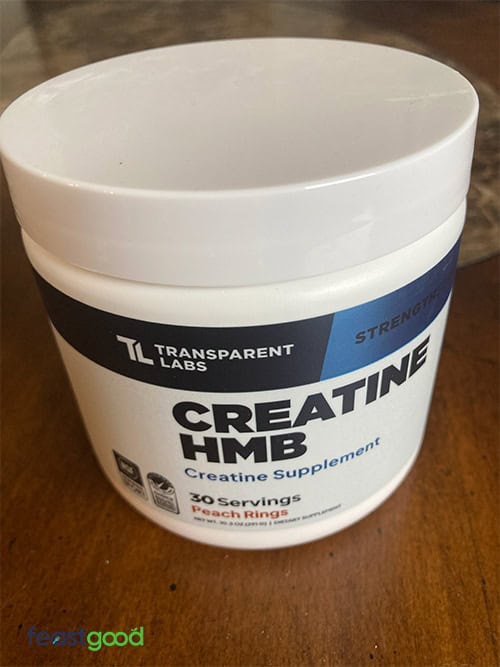
That said, the brand name that I trust to provide quality, clinically-effective doses of a third-party tested product is Transparent Labs Creatine HMB Creatine Supplement.
Should You Buy Powder or Capsules?
This mostly comes down to preference.
Powder is usually the most economical option, while capsules can be convenient for travel or people who don’t like mixing powder into drinks.
The delivery format doesn’t change the fundamental benefits of creatine as long as you’re getting an effective amount.
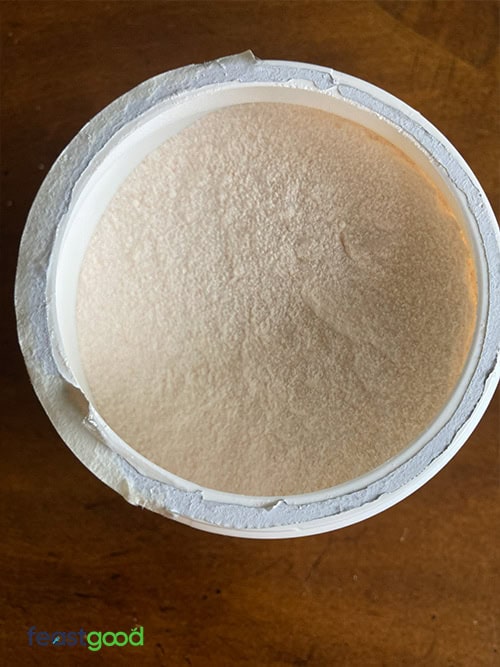
I personally like Transparent Labs Creatine HMB powder because of its delicious flavors. I opted for “Peach Rings” this time around, and it’s so good it makes me wish it was worthwhile to take more than one serving per day (it’s not, from an efficacy perspective, and would just lead to added cost for me).
Does Creatine Need To Be Third-Party Tested?
Third-party testing isn’t what makes creatine effective, but it can provide additional reassurance about product quality and label accuracy.
This is especially relevant for competitive athletes who are subject to banned-substance testing. For those athletes, certifications designed specifically for sport can provide an additional level of assurance.
This was particularly important for me when I was competing in sanctioned powerlifting meets and had to adhere to WADA (World Anti-doping Association) standards. Transparent Labs’ certificates of analysis for their products gave me peace of mind that I was only getting exactly what was on the label, in the amounts stated on the label.
What Ingredients Should You Avoid?
You don’t necessarily need to “avoid” every ingredient besides creatine.
However, be cautious about products that use a long list of ingredients to make a simple creatine product seem more sophisticated than it is.
If a product contains creatine, caffeine, amino acids, herbal ingredients, and several other compounds, make sure you actually understand why each ingredient is there and whether you’re getting an effective dose.
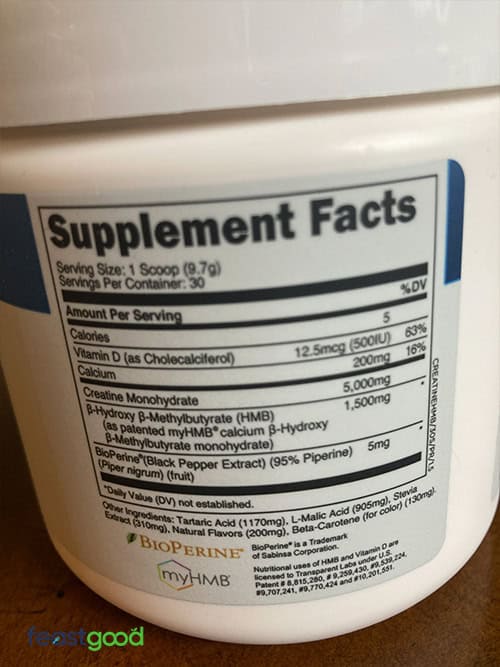
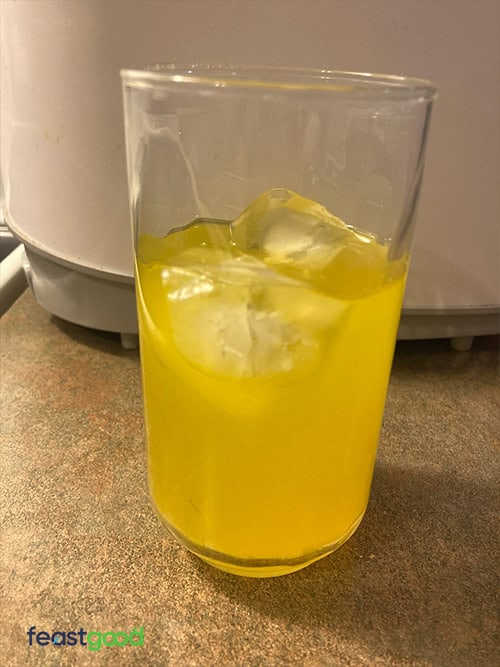
Also watch out for unnecessary fillers, sweeteners, and artificial flavors and colors. I love that Transparent Labs is naturally sweetened with stevia and the “Peach Rings” flavor I tried was naturally colored with beta-carotene. I was surprised at how brightly colored it was:
Another risk is impurities such as cyanide or ammonia in the final product from less reputable brands. I’m glad that I never have to worry about those impurities with Transparent Labs.
What Ingredients Should You Look For?
Beyond creatine monohydrate, you can also look for other proven supplements, ideally in clinically-effective does.
Transparent Labs Creatine HMB provides 1.5 grams of myHMB® along with 5 grams of creatine monohydrate in each scoop. HMB (beta-hydroxy beta-methylbutyrate) is another widely-regarded supplement to assist with muscle-building/preserving lean muscle mass.
I used to supplement HMB separately when I was making my own “supplement stacks,” so finding a product with the two supplements together created a convenience win for me. Combining these two products is more effective in increasing athletic performance and improving body composition than taking either one individually.
My only “beef” is that 1.5 grams of HMB is below the recommended clinically effective dose of 3 grams.
Is More Expensive Creatine Better?
Usually, no, but in the case of Transparent Labs (where a serving is ~$1.50-$1.66), my colleagues and I have all agreed that the value of getting a trusted third-party tested product that provides the convenience of creatine and HMB in one scoop and provides delicious flavors with all natural ingredients makes it worth it.
Check out our in-depth review of Transparent Labs Creatine HMB for all the details.
Creatine monohydrate on its own is relatively inexpensive, and paying more doesn’t automatically mean you’re getting better creatine.
You may be paying for flavoring, convenience, added ingredients, certifications, packaging, or brand positioning – and that’s exactly what’s behind the heftier price tag at Transparent Labs.
Those things can have value, but they don’t necessarily make the creatine itself more effective, so rest assured that you can still reap the benefits of creatine even if Transparent Labs doesn’t suit your budget.
Our top budget pick is Bulk Supplements Creatine Monohydrate, coming in at ~$0.20/serving.
How To Take Creatine
Once you’ve chosen a product that suits your goals, preferences and budget, taking creatine is remarkably simple: just mix your recommended dose with at least 10-12 ounces of water or another beverage.
Check out the straightforward Directions on the Transparent Labs Creatine HMB package:
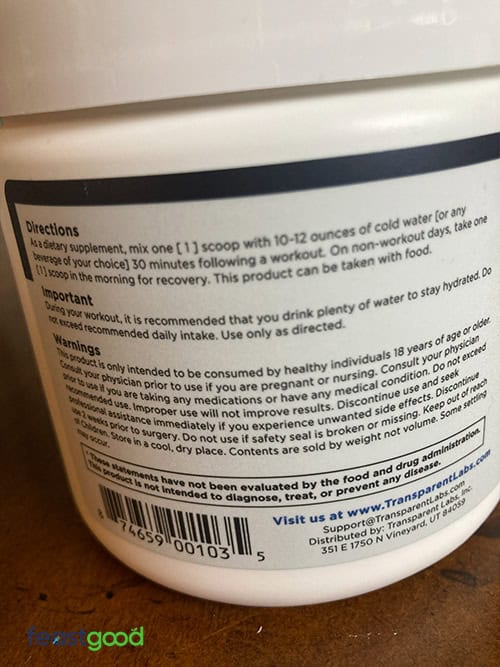
I personally mix one scoop into an 800-mL water bottle and sip it during my workout (I found the flavor too strong when I mixed it with just 12-oz of water). The most important consideration is finding a method you’ll actually use consistently.
Learn more about what to mix creatine with in these articles:
- What To Mix Creatine With (8 Examples + Liquids To Avoid)
- Can You Mix Creatine With Alcohol? 4 Side Effects
- Can You Mix Creatine With Energy Drinks? (Pros & Cons)
- Can You Mix Creatine With Hot Liquids?
- Can You Mix Creatine With Juice? (And, Is It More Effective)
- Can You Mix Creatine With Milk? (Yes, Here’s How To Do It)
- Can You Mix Creatine With Oatmeal? (Pros & Cons)
Common Creatine Mistakes To Avoid
Creatine is simple, but there are still plenty of ways to overcomplicate it – and that’s the biggest mistake.
Taking Creatine Only on Workout Days
Creatine works by increasing and maintaining muscle creatine stores.
That means taking it only on training days isn’t the most straightforward approach.
A daily habit is easier to remember and better aligned with the way creatine supplementation works.
Taking Too Much
More isn’t necessarily better.
Once your muscle creatine stores are adequately elevated, taking significantly more doesn’t automatically produce greater results – it just results in what we call “more expensive urine,” since you’re peeing out the excess amounts.
Large doses may also increase the likelihood of gastrointestinal discomfort.
Overthinking Creatine Timing
You don’t need to set an alarm for your creatine.
If you consistently take it at breakfast, after your workout, or with your evening meal, that’s fine.
The best timing is the timing that helps you remember.
Switching Products Too Often
If your creatine product works for you, there’s no reason to keep changing brands because another product has a more impressive label.
Look for the fundamentals: creatine monohydrate, appropriate dosing, quality control, and a reasonable price.
I’m glad that Transparent Labs has 13 natural flavors to choose from – it will keep me coming back to the same product (just a different flavor) for over a year (getting a 30-day serving size of each flavor to try).
Expecting Creatine To Replace Good Nutrition and Training
This is the biggest mistake of all.
Creatine can support a good training program, but it can’t compensate for inconsistent workouts, inadequate protein, poor sleep, or a diet that doesn’t support your goal.
Think of creatine as the finishing touch—not the foundation.
Final Verdict: Is Creatine Worth Taking in 2026?
If you want the simplest, most evidence-backed approach, choose a quality creatine monohydrate, take it consistently, and don’t overcomplicate it.
My Recommendation
A short practical checklist:
- Choose creatine monohydrate
- Look for third-party testing
- Take an effective daily dose
- Take it consistently
- Don’t worry excessively about timing
- Expect gradual rather than overnight results
For me, the product that checks all the boxes on the checklist is Transparent Labs Creatine HMB.
Additional Creatine Resources
- Can You Take Creatine Before Bed? And, Does It Affect Sleep?
- What Happens When You Stop Creatine (6 Things To Know)
- This Is Why Your Creatine Is Not Dissolving (And How To Fix)
- Does Creatine Make You Look Bigger? 5 Things To Know
- Does Creatine Help You Lose Weight? (What Science Says)
- If You Missed a Day of Creatine Do These 3 Things
References
Buford TW, Kreider RB, Stout JR, Greenwood M, Campbell B, Spano M, Ziegenfuss T, Lopez H, Landis J, Antonio J. International Society of Sports Nutrition position stand: creatine supplementation and exercise. J Int Soc Sports Nutr. 2007 Aug 30;4:6. doi: 10.1186/1550-2783-4-6. PMID: 17908288; PMCID: PMC2048496.
Burke R, Piñero A, Coleman M, Mohan A, Sapuppo M, Augustin F, Aragon AA, Candow DG, Forbes SC, Swinton P, Schoenfeld BJ. The Effects of Creatine Supplementation Combined with Resistance Training on Regional Measures of Muscle Hypertrophy: A Systematic Review with Meta-Analysis. Nutrients. 2023 Apr 28;15(9):2116. doi: 10.3390/nu15092116. PMID: 37432300; PMCID: PMC10180745.
Allen PJ. Creatine metabolism and psychiatric disorders: Does creatine supplementation have therapeutic value? Neurosci Biobehav Rev. 2012 May;36(5):1442-62. doi: 10.1016/j.neubiorev.2012.03.005. Epub 2012 Mar 24. PMID: 22465051; PMCID: PMC3340488.
Bonora, M., Patergnani, S., Rimessi, A. et al. ATP synthesis and storage. Purinergic Signaling 8, 343–357 (2012). https://doi.org/10.1007/s11302-012-9305-8
Gastin, P.B. Energy System Interaction and Relative Contribution During Maximal Exercise. Sports Med 31, 725–741 (2001). https://doi.org/10.2165/00007256-200131100-00003
Persky AM, Brazeau GA. Clinical pharmacology of the dietary supplement creatine monohydrate. Pharmacol Rev. 2001 Jun;53(2):161-76. PMID: 11356982.
Kreider, R.B., Kalman, D.S., Antonio, J. et al. International Society of Sports Nutrition position stand: safety and efficacy of creatine supplementation in exercise, sport, and medicine. J Int Soc Sports Nutr 14, 18 (2017). https://doi.org/10.1186/s12970-017-0173-z
Rawson ES, Volek JS. Effects of creatine supplementation and resistance training on muscle strength and weightlifting performance. J Strength Cond Res. 2003 Nov;17(4):822-31. doi: 10.1519/1533-4287(2003)017<0822:eocsar>2.0.co;2. PMID: 14636102.
Izquierdo M, Ibañez J, González-Badillo JJ, Gorostiaga EM. Effects of creatine supplementation on muscle power, endurance, and sprint performance. Med Sci Sports Exerc. 2002 Feb;34(2):332-43. doi: 10.1097/00005768-200202000-00023. PMID: 11828245.
Jiaming, Y., & Rahimi, M. H. (2021). Creatine supplementation effect on recovery following exercise-induced muscle damage: A systematic review and meta-analysis of randomized controlled trials. Journal of Food Biochemistry, 45, e13916. https://doi.org/10.1111/jfbc.13916
Xu C, Bi S, Zhang W and Luo L (2024) The effects of creatine supplementation on cognitive function in adults: a systematic review and meta-analysis. Front. Nutr. 11:1424972. doi: 10.3389/nut.2024.1424972
Kreider RB, Kalman DS, Antonio J, Ziegenfuss TN, Wildman R, Collins R, Candow DG, Kleiner SM, Almada AL, Lopez HL. International Society of Sports Nutrition position stand: safety and efficacy of creatine supplementation in exercise, sport, and medicine. J Int Soc Sports Nutr. 2017 Jun 13;14:18. doi: 10.1186/s12970-017-0173-z. PMID: 28615996; PMCID: PMC5469049.
Naeini, E.K., Eskandari, M., Mortazavi, M. et al. Effect of creatine supplementation on kidney function: a systematic review and meta-analysis. BMC Nephrol 26, 622 (2025). https://doi.org/10.1186/s12882-025-04558-6
Powers ME, Arnold BL, Weltman AL, Perrin DH, Mistry D, Kahler DM, Kraemer W, Volek J. Creatine Supplementation Increases Total Body Water Without Altering Fluid Distribution. J Athl Train. 2003 Mar;38(1):44-50. PMID: 12937471; PMCID: PMC155510.
Talar, K., Hernández-Belmonte, A., Vetrovsky, T., Steffl, M., Kałamacka, E., & Courel-Ibáñez, J. (2021). Benefits of Resistance Training in Early and Late Stages of Frailty and Sarcopenia: A Systematic Review and Meta-Analysis of Randomized Controlled Studies. Journal of Clinical Medicine, 10(8), 1630. https://doi.org/10.3390/jcm10081630
Candow DG, Forbes SC, Chilibeck PD, Cornish SM, Antonio J, Kreider RB. Effectiveness of Creatine Supplementation on Aging Muscle and Bone: Focus on Falls Prevention and Inflammation. J Clin Med. 2019 Apr 11;8(4):488. doi: 10.3390/jcm8040488. PMID: 30978926; PMCID: PMC6518405.
Yoshizumi WM, Tsourounis C. Effects of creatine supplementation on renal function. J Herb Pharmacother. 2004;4(1):1-7. PMID: 15273072.
Johnson, B. V. B., Milstead, M., Kreider, R., & Jones, R. (2025). Dietary supplement considerations during glucagon-like peptide-1 receptor agonist treatment: A narrative review. Obesity Pillars, 16, 100209. https://doi.org/10.1016/j.obpill.2025.100209
Ribeiro F, Longobardi I, Perim P, Duarte B, Ferreira P, Gualano B, Roschel H, Saunders B. Timing of Creatine Supplementation around Exercise: A Real Concern? Nutrients. 2021 Aug 19;13(8):2844. doi: 10.3390/nu13082844. PMID: 34445003; PMCID: PMC8401986.
Cribb PJ, Hayes A. Effects of supplement timing and resistance exercise on skeletal muscle hypertrophy. Med Sci Sports Exerc. 2006 Nov;38(11):1918-25. doi: 10.1249/01.mss.0000233790.08788.3e. PMID: 17095924.
Hultman E, Söderlund K, Timmons JA, Cederblad G, Greenhaff PL. Muscle creatine loading in men. J Appl Physiol (1985). 1996 Jul;81(1):232-7. doi: 10.1152/jappl.1996.81.1.232. PMID: 8828669.
Jówko E, Ostaszewski P, Jank M, Sacharuk J, Zieniewicz A, Wilczak J, Nissen S. Creatine and beta-hydroxy-beta-methylbutyrate (HMB) additively increase lean body mass and muscle strength during a weight-training program. Nutrition. 2001 Jul-Aug;17(7-8):558-66. doi: 10.1016/s0899-9007(01)00540-8. PMID: 11448573.
Jakubowski JS, Nunes EA, Teixeira FJ, Vescio V, Morton RW, Banfield L, Phillips SM. Supplementation with the Leucine Metabolite β-hydroxy-β-methylbutyrate (HMB) does not Improve Resistance Exercise-Induced Changes in Body Composition or Strength in Young Subjects: A Systematic Review and Meta-Analysis. Nutrients. 2020 May 23;12(5):1523. doi: 10.3390/nu12051523. PMID: 32456217; PMCID: PMC7285233.
Fernández-Landa J, Fernández-Lázaro D, Calleja-González J, Caballero-García A, Córdova Martínez A, León-Guereño P, Mielgo-Ayuso J. Effect of Ten Weeks of Creatine Monohydrate Plus HMB Supplementation on Athletic Performance Tests in Elite Male Endurance Athletes. Nutrients. 2020 Jan 10;12(1):193. doi: 10.3390/nu12010193. PMID: 31936727; PMCID: PMC7019716.
Fernández-Landa J, Calleja-González J, León-Guereño P, Caballero-García A, Córdova A, Mielgo-Ayuso J. Effect of the Combination of Creatine Monohydrate Plus HMB Supplementation on Sports Performance, Body Composition, Markers of Muscle Damage and Hormone Status: A Systematic Review. Nutrients. 2019 Oct 20;11(10):2528. doi: 10.3390/nu11102528. PMID: 31635165; PMCID: PMC6835217.
Lenhart A, Chey WD. A Systematic Review of the Effects of Polyols on Gastrointestinal Health and Irritable Bowel Syndrome. Adv Nutr. 2017 Jul 14;8(4):587-596. doi: 10.3945/an.117.015560. PMID: 28710145; PMCID: PMC5508768.
About The Author

Lauren Loveswell is a Precision Nutrition Level 1 certified nutrition coach. She focuses on helping busy professionals balance healthy eating and purposeful movement. Lauren has a background in competitive swimming and is currently competing as a CrossFit athlete. She has a passion for training, teaching, and writing.
Why Trust Our Content

On Staff at FeastGood.com, we have Registered Dietitians, coaches with PhDs in Human Nutrition, and internationally ranked athletes who contribute to our editorial process. This includes research, writing, editing, fact-checking, and product testing/reviews. At a bare minimum, all authors must be certified nutrition coaches by either the National Academy of Sports Medicine, International Sport Sciences Association, or Precision Nutrition. Learn more about our team here.
Have a Question?
If you have any questions or feedback about what you’ve read, you can reach out to us at info@feastgood.com. We respond to every email within 1 business day.
